Look, don't approach

Sydney snake
identification

Use this guide to understand possibilities, never to decide that an unknown snake is safe. Natural variation, juveniles, shadows and distance can defeat photo identification.

THE SAFE IDENTIFICATION RULE

Identify from evidence.
Act on uncertainty.

UNKNOWN SNAKE = KEEP BACK

Do not touch, trap, corner or kill it. Move people and pets away. A photo only helps when it already exists or can be taken with zoom from a genuinely safe place.

0485 669 824
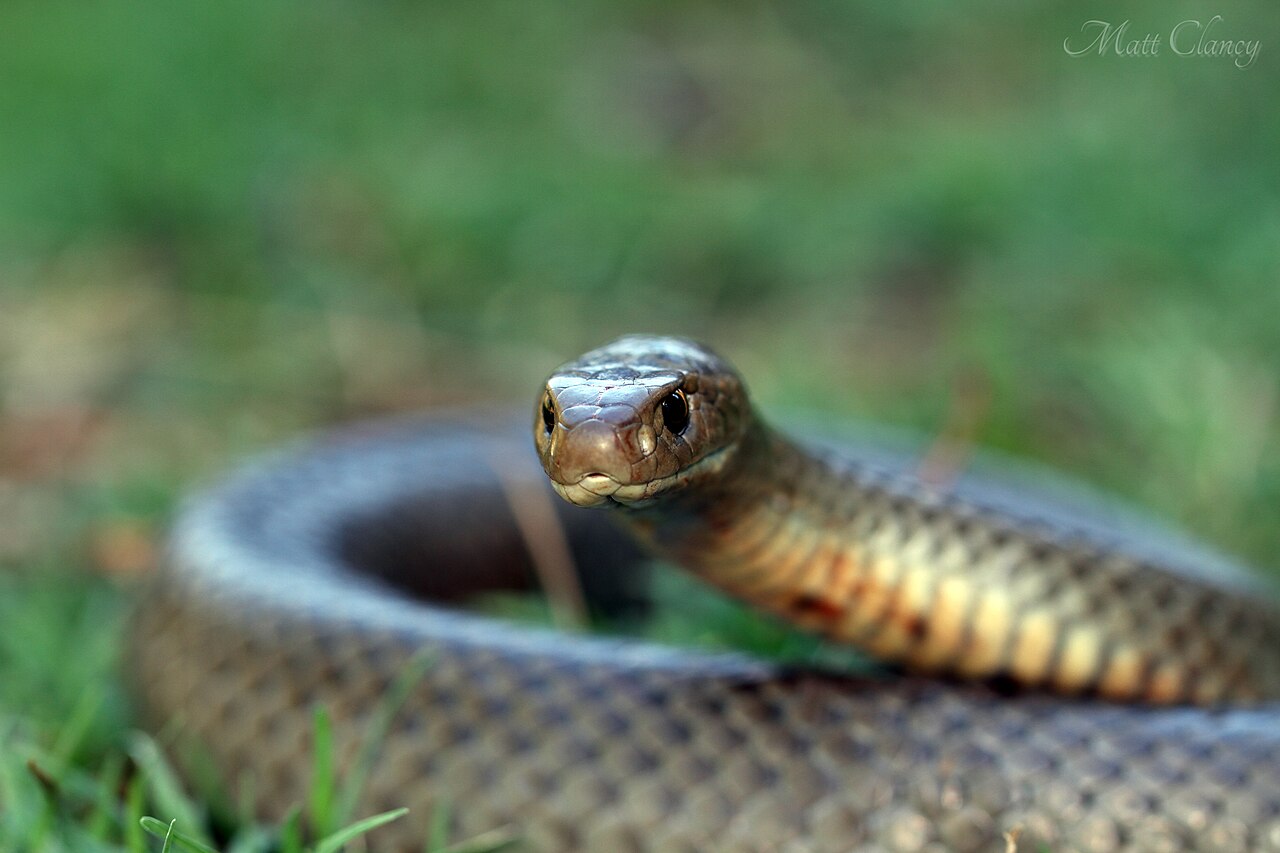
Eastern brown snake on natural ground

Highly venomous

Eastern brown snake

Pseudonaja textilis

Appearance
Adults can be tan, grey, orange-brown, dark brown or almost black. Young animals may be banded and can show a dark head marking.
Habitat clue
Open country, grass margins, disturbed land, farms, reserves and urban edges where shelter and rodents are available.
Common mistake
Colour is not enough. A small or patterned snake can still be an eastern brown.
Australian Museum guide Photo: Matt Clancy, CC BY 2.0
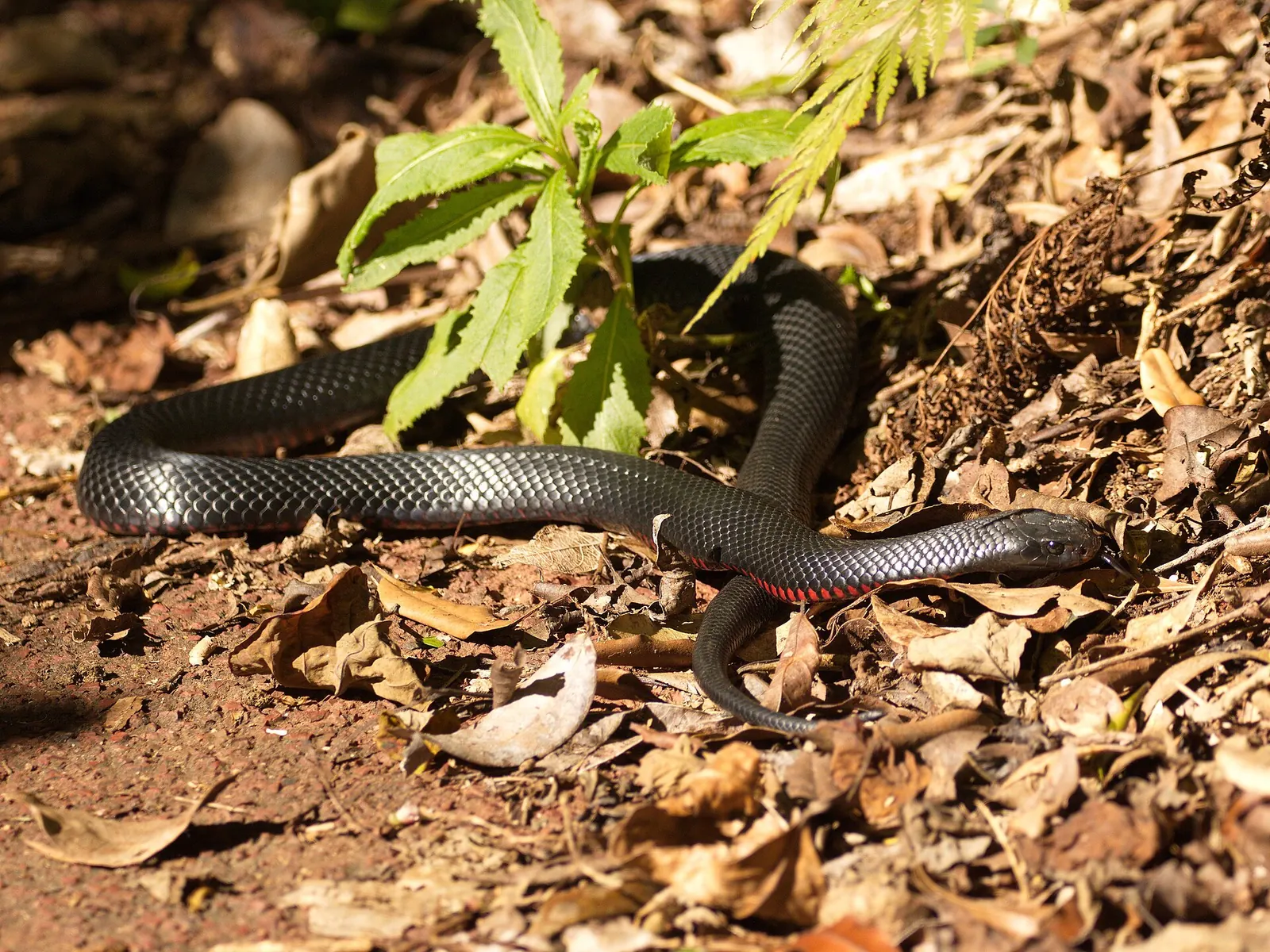
Red-bellied black snake in leaf litter

Venomous

Red-bellied black snake

Pseudechis porphyriacus

Appearance
Usually glossy black above with red, crimson or pink along the lower sides. The coloured flank can be hidden from someone looking down at the snake.
Habitat clue
Often associated with creeks, swamps, lagoons, dams and other wetter habitat, but it can move beyond the water's edge.
Common mistake
A dark snake without a visible red belly is not automatically another species.
Australian Museum guide Photo: Matt Clancy, CC BY 2.0
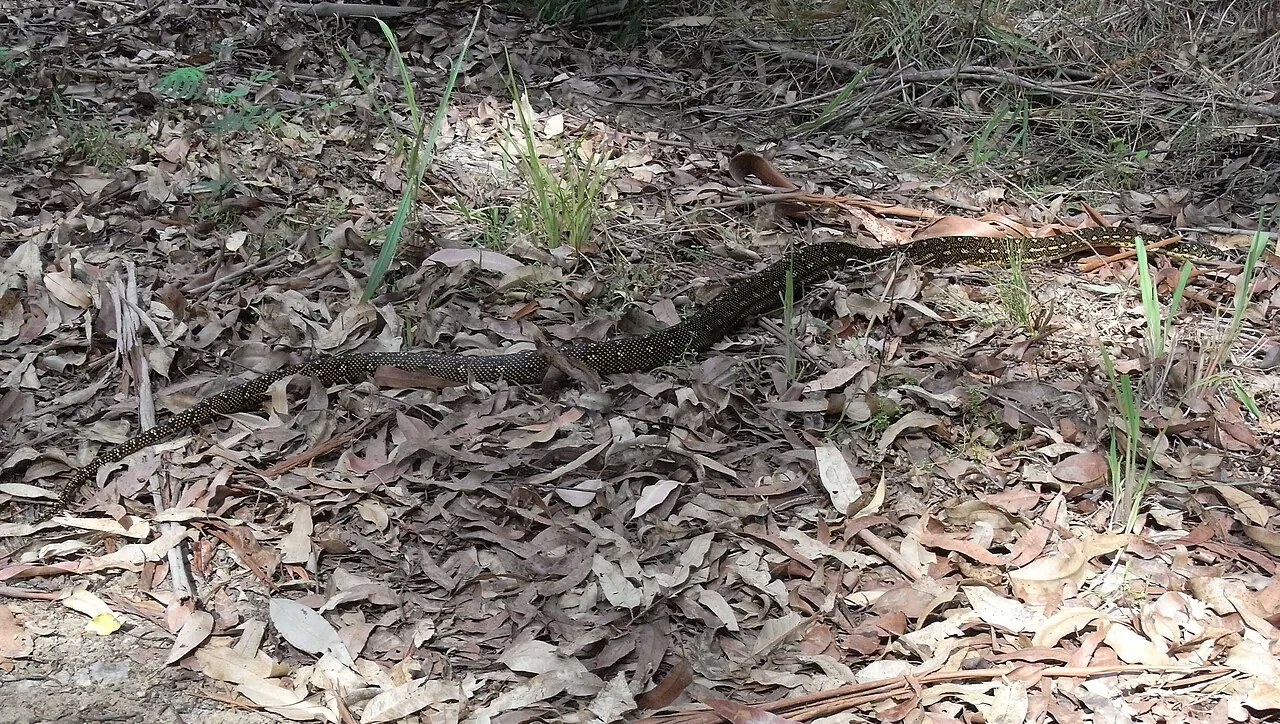
Wild diamond python resting beside vegetation

Non-venomous

Diamond python

Morelia spilota spilota

Appearance
A dark python with cream or yellow markings that can form rosettes or diamond-like patterning. Individuals vary and the pattern may be hard to see in shade.
Habitat clue
Bushland, mature gardens, rockwork, roof spaces, trees and sheltered structures in coastal and south-eastern parts of the Sydney region.
Common mistake
Do not approach because the pattern seems familiar. A large python can bite when cornered.
Australian Museum guide Photo: Quartl, CC BY-SA 3.0

SMALLER SPECIES / EASY TO MISREAD

Three more Sydney
possibilities

04 / Venomous

Yellow-faced whip snake

Demansia psammophis

Slender, fast and day-active; colour can range through grey, olive or brown, usually with dark facial markings edged by paler scales.

Lookalike warning: Often confused with an eastern brown snake, particularly during a brief garden sighting.

Australian Museum species page ↗
05 / Venomous

Golden-crowned snake

Cacophis squamulosus

A small, mostly nocturnal forest snake with a pale marking over the head and neck. It may flatten its neck or raise the front of its body when defensive.

Lookalike warning: The crown may be incomplete, obscured or invisible in a poor photograph; posture is not an identification test.

Australian Museum species page ↗
06 / Non-venomous burrower

Blind snake

Anilios nigrescens

Small, smooth and cylindrical with a blunt head and tail. It is often found after rain, digging or garden work and can resemble a large earthworm.

Lookalike warning: A tiny snake should still be left alone. Size and a worm-like shape are not reasons to pick it up.

Australian Museum species page ↗

WHY A PHOTO CAN FAIL

One image is not a field examination

Juveniles can look different from adults. A phone camera can shift colour, flatten pattern and hide scale detail. The head may be obscured, the body may be partly concealed, and more than one species can share the same general colour or build.

Location and habitat narrow possibilities but do not prove an identification. Sydney contains more snake diversity than the six examples on this page, and snakes can travel through habitat that does not look typical.

For a safety decision, the useful facts are the last known position, direction of travel, whether it is inside or outside, and whether people or pets can be kept away.

Identification sources

Species descriptions are paraphrased from the linked Australian Museum profiles. General safety is checked against NSW Environment guidance ↗. Public photographs and full licence details appear on the sources and photo credits page.

Snake nearby?Keep back. Keep watch.CALL • 0485 669 824