
Local details that make a difference
Homes and community facilities around Mittigar Reserve
Mittigar Reserve is the suburb's major open-space landmark, and Blacktown City has current landscaping and facility works in the precinct. Council's overland-flow study also maps drainage paths and footbridges around Mittigar. In nearby streets, fenced yards, schools, sports areas and drainage edges can meet within a small area.
For the wider service context, see our Blacktown snake removal guide and the Blacktown and Western Sydney service area. This page covers the access and safety details specific to Hassall Grove.
VERIFIED LOCAL DETAIL
Why Hassall Grove needs its own field note
Mittigar Reserve is the main recreation landmark
Blacktown City lists Mittigar Reserve as a local parks and recreation facility. The reserve name should be paired with a field, street frontage, path or building so the correct side is clear.
Blacktown City Council — Mittigar Reserve ↗The precinct has current landscape and facility works
Council's Ward 5 program identifies upgrades and landscaping around Mittigar Reserve and works in Stockholm Avenue. Observe construction controls and use only the approved public entrance.
Blacktown City Council — Ward 5 projects ↗Drainage paths and footbridges are mapped locally
Council's overland-flow study records crossings around the Mittigar area. Footbridges and channels are location markers, not safe places to look under or enter during a sighting.
Blacktown City Council — Local Overland Flow Study ↗PET EMERGENCY CONTACTS
Plan the Hassall Grove vet call before the drive
Ring first, put the phone on speaker if another person is preparing the pet, and follow the veterinary team's directions. Keep the animal calm and reduce walking or struggling as much as possible.
How the surroundings affect a sighting Hassall Grove
Open sunny edges may suit eastern brown snakes, drainage corridors may suit red-bellied black snakes and suburban gardens may suit yellow-faced whip snakes. These are wider Blacktown habitat possibilities only.
Eastern brown snake
May use open ground, grass margins, disturbed land and places where rodents are active.
Do not use this as an ID: Colour varies widely; a brown or grey snake cannot be identified safely by colour.
Australian Museum species guide ↗Red-bellied black snake
Often associated with wetter habitat such as creeks, drains, wetlands and dam margins.
Do not use this as an ID: The red or pink flank may be hidden from view, especially from above.
Australian Museum species guide ↗Yellow-faced whip snake
A fast, slender daytime snake that may occur in open woodland, gardens and suburban edges.
Do not use this as an ID: It is frequently mistaken for a juvenile eastern brown snake; do not rely on a quick glance.
Australian Museum species guide ↗These are habitat-based possibilities for the wider district, not a claim that any species is common on a particular Hassall Grove property. The Sydney snake identification guide explains the limits of visual identification.
If you lose sight of it
Bring children and pets inside and observe only from a protected place. In a reserve, remain on formed access and keep others away. Do not enter a channel, look under a bridge or search garden material after the snake disappears.
Do not touch, trap, corner or try to kill the snake. Bring children and pets away and call a trained reptile handler.
LOCAL VISUAL / REGIONAL CONTEXT
Putting the streets in context
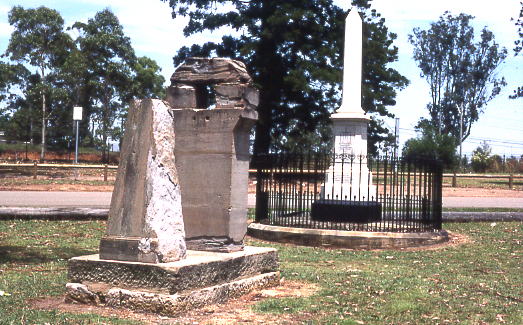
Parramatta Park — a central-west reference showing how substantial green space sits within a built-up centre.
Photo: Sardaka / Wikimedia Commons ↗ · CC BY-SA 3.0 ↗. Cropped for display.
Hassall Grove map: use this to check the wider road, reserve and waterway pattern—not to approach a snake. Provider attribution appears inside the map.
Getting the catcher to the scene
Give the street number or named reserve entrance and the nearest field, building, footbridge or fence. Arrange a meeting point that does not require anyone to cross the last sighting area.
Let us know whether the snake is inside or outside, whether a gate or door is locked and whether animals are still on the property.
a snake in a side passage, garage, garden shed or fenced yard
movement near Mittigar Reserve, a footbridge or a mapped drainage path
a school, field or community-facility sighting where public access must be redirected
PET SAFETY / DETAILS CHECKED 28 AUGUST 2026
A practical vet reference
For Hassall Grove, Blacktown Veterinary Hospital is shown as the researched local contact and SASH Western Sydney as the all-hours regional fallback. Each listing links to the provider's official information.
The emergency department states that it is open 24/7; no booking is required.
Local Blacktown clinic; the website lists a separate emergency referral.
These entries were checked on 28 August 2026. They support quick decision-making but do not promise that either service is the nearest available from a particular address at the moment you call.
Independent contact information only. Snake Catcher Sydney Wide is not affiliated with these veterinary providers. In a life-threatening pet emergency, follow the veterinary team's instructions immediately.
A few questions on the call
We will ask where the snake was last seen, what sort of property it is and the safest place to meet you. An existing photo can be useful, but nobody should move closer to take one. Once we know the situation, we can give you an honest indication of availability and travel time.
Tidying without overdoing it
Repair door and garage gaps, keep pet feed and bins from attracting rodents, and lift garden materials clear of the ground. Maintain private boundaries but leave council drainage and reserve planting undisturbed.
No property can be completely snake-proof. The practical aim is better visibility, fewer hiding places and less food for rodents, without harming native wildlife.
Call 000 immediately. Keep the person still and calm, apply a pressure immobilisation bandage, and do not wash, cut or suck the bite. Follow the emergency operator and Healthdirect guidance ↗.
Quick local answers
Answers for Hassall Grove
What should I report for a snake near Mittigar Reserve?
Name the nearest street, field, building, path or footbridge and keep people away from that immediate point. Do not enter drainage land or vegetation to improve the description.
Do I need pest control or a snake catcher?
If you are searching for pest control or pest removal because you have found a snake, contact a licensed snake catcher directly. A pest-control business that does not provide licensed snake handling may need to refer your call, adding a step and potentially delaying arrangements. Some pest controllers also offer licensed snake catching; ask whether they can arrange an appropriately licensed handler. Keep people and pets away and call Snake Catcher Sydney Wide to confirm the fee, availability and estimated arrival.
What if the snake has already moved on in Hassall Grove?
Tell us where it was, when it was seen and which way it went. Do not search dense plants, roof spaces, cupboards or stored material yourself.
What if somebody may have been bitten?
Call 000 immediately, keep the person still and follow the emergency operator's instructions. Do not wait for a snake catcher before seeking medical help.
The local background comes from Blacktown City Council — Mittigar Reserve ↗, with snake safety checked against NSW Environment guidance ↗. The embedded public map is used to confirm the suburb, roads and named landscape reference. Habitat can vary from street to street, so we do not claim that a particular species is common at any address.