
For local homes and workplaces
Industrial stock must stay exactly where it is
Pallets, containers, drains and roller doors can provide cover at work, while older residential yards may include low sheds and stacked building material.
Seven Hills and Blacktown have separate local guides. If the snake is at a Blacktown address, use our Blacktown snake catcher guide for that suburb's property access and local information. For Seven Hills, give the exact street, business entrance or loading-bay number when calling.
PET EMERGENCY CONTACTS
A call-first veterinary plan for Seven Hills
A pet can need urgent assessment even when there are no obvious fang marks. Keep it still, avoid food, water or medication unless a vet says otherwise, and use one of the direct phone links below.
snake near pallets, containers or a loading bay
sighting in a garage or older backyard
call from rail-side land or a shared commercial estate
PET SAFETY / DETAILS CHECKED 28 AUGUST 2026
The researched local vet option
The local contact is Blacktown Veterinary Hospital. The second listing, SASH Western Sydney, is the 24-hour fallback for the wider district. Both entries include an address, a live phone link, directions and the clinic's own page.
Local Blacktown clinic; the website lists a separate emergency referral.
The emergency department states that it is open 24/7; no booking is required.
We do not calculate a road-time promise from Seven Hills. Calling first lets the veterinary team confirm intake, give transport advice and redirect you if another hospital is more appropriate.
Independent contact information only. Snake Catcher Sydney Wide is not affiliated with these veterinary providers. In a life-threatening pet emergency, follow the veterinary team's instructions immediately.
Making access straightforward
Provide the industrial unit, driveway, roller door and site contact. Residential callers should mention rear access and dogs.
Let us know whether the snake is inside or outside, whether a gate or door is locked and whether animals are still on the property.
Give the snake room
Turn forklifts and machinery off. Do not move stock to improve visibility; note the aisle, bay or fixed rack instead.
Do not touch, trap, corner or try to kill the snake. Bring children and pets away and call a trained reptile handler.
Making the area easier to check
Use raised racking, manage waste and repair door seals during normal operations. Keep outdoor storage lanes visible.
No property can be completely snake-proof. The practical aim is better visibility, fewer hiding places and less food for rodents, without harming native wildlife.
LOCAL VISUAL / REGIONAL CONTEXT
Where suburb and habitat meet
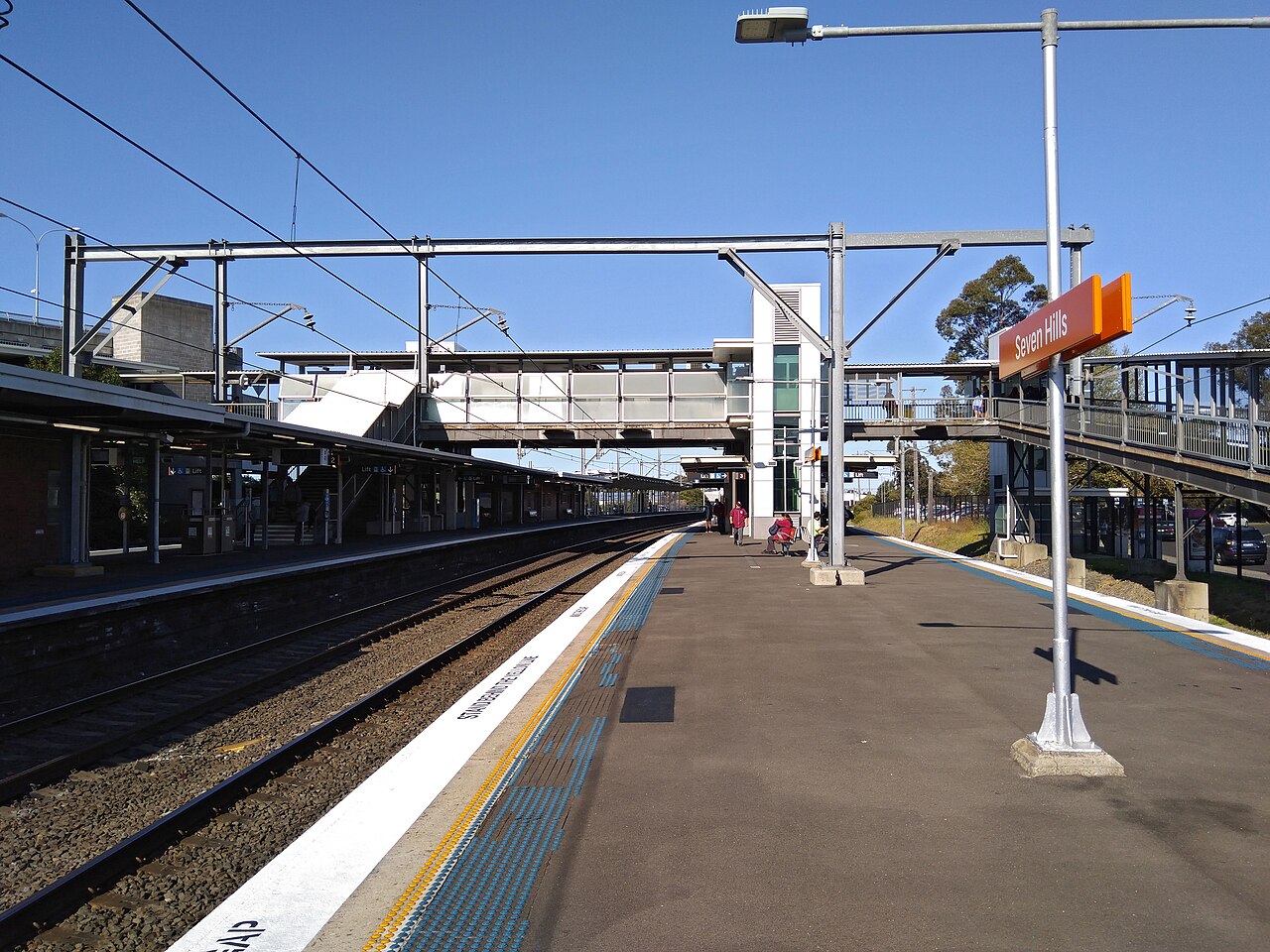
Seven Hills railway station, photographed in September 2017. A local landmark photograph, not evidence of snake activity or a call-out.
Photo: Gareth Edwards / Wikimedia Commons ↗ · CC BY-SA 3.0 ↗. Cropped for display.
Seven Hills map: use this to check the wider road, reserve and waterway pattern—not to approach a snake. Provider attribution appears inside the map.
A note about nearby habitat Seven Hills
Creek corridors and wetter drainage land may suit red-bellied black snakes, while open reserves, rail land and industrial edges can suit eastern brown snakes. These are habitat clues only, not a safe identification.
Eastern brown snake
May use open ground, grass margins, disturbed land and places where rodents are active.
Do not use this as an ID: Colour varies widely; a brown or grey snake cannot be identified safely by colour.
Australian Museum species guide ↗Red-bellied black snake
Often associated with wetter habitat such as creeks, drains, wetlands and dam margins.
Do not use this as an ID: The red or pink flank may be hidden from view, especially from above.
Australian Museum species guide ↗Yellow-faced whip snake
A fast, slender daytime snake that may occur in open woodland, gardens and suburban edges.
Do not use this as an ID: It is frequently mistaken for a juvenile eastern brown snake; do not rely on a quick glance.
Australian Museum species guide ↗These are habitat-based possibilities for the wider district, not a claim that any species is common on a particular Seven Hills property. The Sydney snake identification guide explains the limits of visual identification.
Before anyone sets out
We will ask where the snake was last seen, what sort of property it is and the safest place to meet you. An existing photo can be useful, but nobody should move closer to take one. Once we know the situation, we can give you an honest indication of availability and travel time.
Call 000 immediately. Keep the person still and calm, apply a pressure immobilisation bandage, and do not wash, cut or suck the bite. Follow the emergency operator and Healthdirect guidance ↗.
What callers often ask
Answers for Seven Hills
Should a Seven Hills warehouse evacuate?
Move everyone from the immediate zone and follow the site's safety plan. The required exclusion area depends on the exact location and can be discussed on the call.
Do I need pest control or a snake catcher?
If you are searching for pest control or pest removal because you have found a snake, contact a licensed snake catcher directly. A pest-control business that does not provide licensed snake handling may need to refer your call, adding a step and potentially delaying arrangements. Some pest controllers also offer licensed snake catching; ask whether they can arrange an appropriately licensed handler. Keep people and pets away and call Snake Catcher Sydney Wide to confirm the fee, availability and estimated arrival.
Can you identify a Seven Hills snake over the phone?
A description or existing photo may help with preparation, but colour and pattern can mislead. Treat an unknown snake with caution until it is assessed in person.
What if the snake is outside and moving away?
Stay well back and do not cut off its escape route. Keep watch only while it remains safe to do so, and note the direction it takes.
The local background comes from NSW Environment — Sydney bushland, wetlands and waterways ↗, with snake safety checked against NSW Environment guidance ↗. The embedded public map is used to confirm the suburb, roads and named landscape reference. Habitat can vary from street to street, so we do not claim that a particular species is common at any address.