
A local note
Balls Head Reserve and the Coal Loader foreshore changes the local service picture
Calls near Balls Head Reserve and the Coal Loader foreshore are not treated as proof of any species. What matters in Waverton is whether apartments, terraces, harbour slopes and shared garages leave a safe exclusion zone and whether the catcher can use the building, basement level, rear lane or foreshore-side street. Those details are confirmed before anyone moves towards the scene.
For the wider service context, see our Blacktown snake removal guide and the Blacktown and Western Sydney service area. This page covers the access and safety details specific to Waverton.
PET EMERGENCY CONTACTS
Pet help to keep handy in Waverton
A snake sighting and a suspected pet bite are two separate emergencies. Call the catcher about the snake; call North Shore Veterinary Hospital or the 24-hour hospital below about the animal without waiting for symptoms.
LOCAL VISUAL / REGIONAL CONTEXT
Reading the local landscape
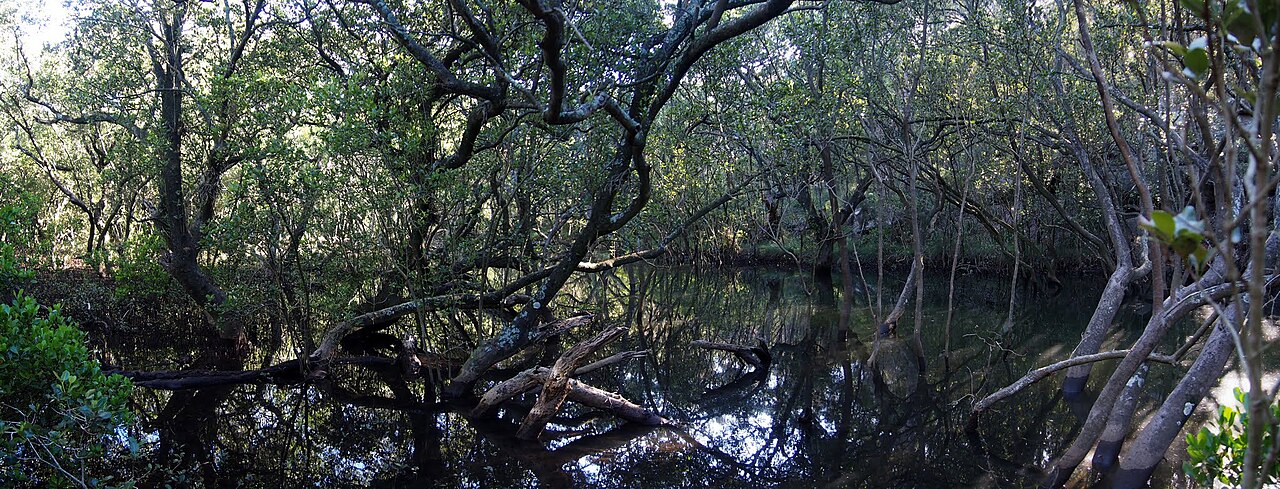
Buffalo Creek — a regional reference for the creek lines and bush corridors threaded through northern Sydney.
Photo: Maurice van Creij / Wikimedia Commons ↗ · CC BY 3.0 ↗. Cropped for display.
Waverton map: use this to check the wider road, reserve and waterway pattern—not to approach a snake. Provider attribution appears inside the map.
snake sighting around apartments, terraces, harbour slopes and shared garages
movement towards Balls Head Reserve and the Coal Loader foreshore
call requiring the building, basement level, rear lane or foreshore-side street
If the snake is still visible
Choose one fixed marker and stay behind a closed door or well back. Around Balls Head Reserve and the Coal Loader foreshore, do not follow a snake into vegetation, waterway land, a work zone or another property. Note the last fixed object it passed and call from a safe place.
Do not touch, trap, corner or try to kill the snake. Bring children and pets away and call a trained reptile handler.
Snakes and habitat around Waverton
Sandstone bushland, creek gullies and mature tree cover can provide habitat for pythons and smaller forest snakes; damp corridors may also suit red-bellied black snakes. Those settings are only broad clues, never a safe identification.
Diamond python
Can use mature trees, roof spaces, thick gardens, rockwork and sheltered structures.
Do not use this as an ID: Do not approach because a pattern appears familiar; large pythons can still defend themselves.
Australian Museum species guide ↗Yellow-faced whip snake
A fast, slender daytime snake that may occur in open woodland, gardens and suburban edges.
Do not use this as an ID: It is frequently mistaken for a juvenile eastern brown snake; do not rely on a quick glance.
Australian Museum species guide ↗Golden-crowned snake
A small nocturnal snake associated with moist forest, sandstone, leaf litter, logs and rocks.
Do not use this as an ID: The pale crown can be incomplete or hard to see, and a defensive posture is not a safe ID test.
Australian Museum species guide ↗These are habitat-based possibilities for the wider district, not a claim that any species is common on a particular Waverton property. The Sydney snake identification guide explains the limits of visual identification.
PET SAFETY / DETAILS CHECKED 28 AUGUST 2026
A nearby veterinary contact
For Waverton pet owners, the first listing is a practical general veterinary contact. The second is a continuously staffed emergency hospital for times when the local clinic is closed or directs you onward.
The hospital states that emergency care is open 24/7; call on the way.
The Artarmon hospital states that it is open 24/7 for emergencies.
The general clinic was selected as a practical option from the centre of Waverton. Street location, traffic, opening hours and triage can change what is most suitable, so phone before travelling.
Independent contact information only. Snake Catcher Sydney Wide is not affiliated with these veterinary providers. In a life-threatening pet emergency, follow the veterinary team's instructions immediately.
Getting to the right spot
For Waverton, give the building, basement level, rear lane or foreshore-side street. Say whether the snake is indoors, outdoors or moving towards Balls Head Reserve and the Coal Loader foreshore, and nominate one person who can meet the catcher without passing the sighting point.
Let us know whether the snake is inside or outside, whether a gate or door is locked and whether animals are still on the property.
What we'll ask when you ring
We will ask where the snake was last seen, what sort of property it is and the safest place to meet you. An existing photo can be useful, but nobody should move closer to take one. Once we know the situation, we can give you an honest indication of availability and travel time.
After the snake has gone
After the immediate risk has passed, inspect door seals and screens, keep frequently used paths visible, lift stored materials off the ground and reduce rodent food around apartments, terraces, harbour slopes and shared garages. Leave creek, foreshore and reserve habitat undisturbed.
No property can be completely snake-proof. The practical aim is better visibility, fewer hiding places and less food for rodents, without harming native wildlife.
Call 000 immediately. Keep the person still and calm, apply a pressure immobilisation bandage, and do not wash, cut or suck the bite. Follow the emergency operator and Healthdirect guidance ↗.
Questions people ask
Answers for Waverton
Does Balls Head Reserve and the Coal Loader foreshore mean snakes are common in Waverton?
No. It is a verified local landscape reference, not a frequency claim. Habitat, weather and individual properties vary, so every unknown snake should be given space and assessed from the actual sighting.
Do I need pest control or a snake catcher?
If you are searching for pest control or pest removal because you have found a snake, contact a licensed snake catcher directly. A pest-control business that does not provide licensed snake handling may need to refer your call, adding a step and potentially delaying arrangements. Some pest controllers also offer licensed snake catching; ask whether they can arrange an appropriately licensed handler. Keep people and pets away and call Snake Catcher Sydney Wide to confirm the fee, availability and estimated arrival.
Can I call late at night in Waverton?
Yes. Calls from Waverton are taken day and night, including weekends and public holidays. We will confirm current availability and likely travel time when you ring.
What is the most useful detail to give you?
Tell us exactly where the snake was last seen and whether it is inside or outside. For Waverton, give the building, basement level, rear lane or foreshore-side street. Say whether the snake is indoors, outdoors or moving towards Balls Head Reserve and the Coal Loader foreshore, and nominate one person who can meet the catcher without passing the sighting point.
The local background comes from NSW Environment — cities, bushland and waterways ↗, with snake safety checked against NSW Environment guidance ↗. The embedded public map is used to confirm the suburb, roads and named landscape reference. Habitat can vary from street to street, so we do not claim that a particular species is common at any address.